
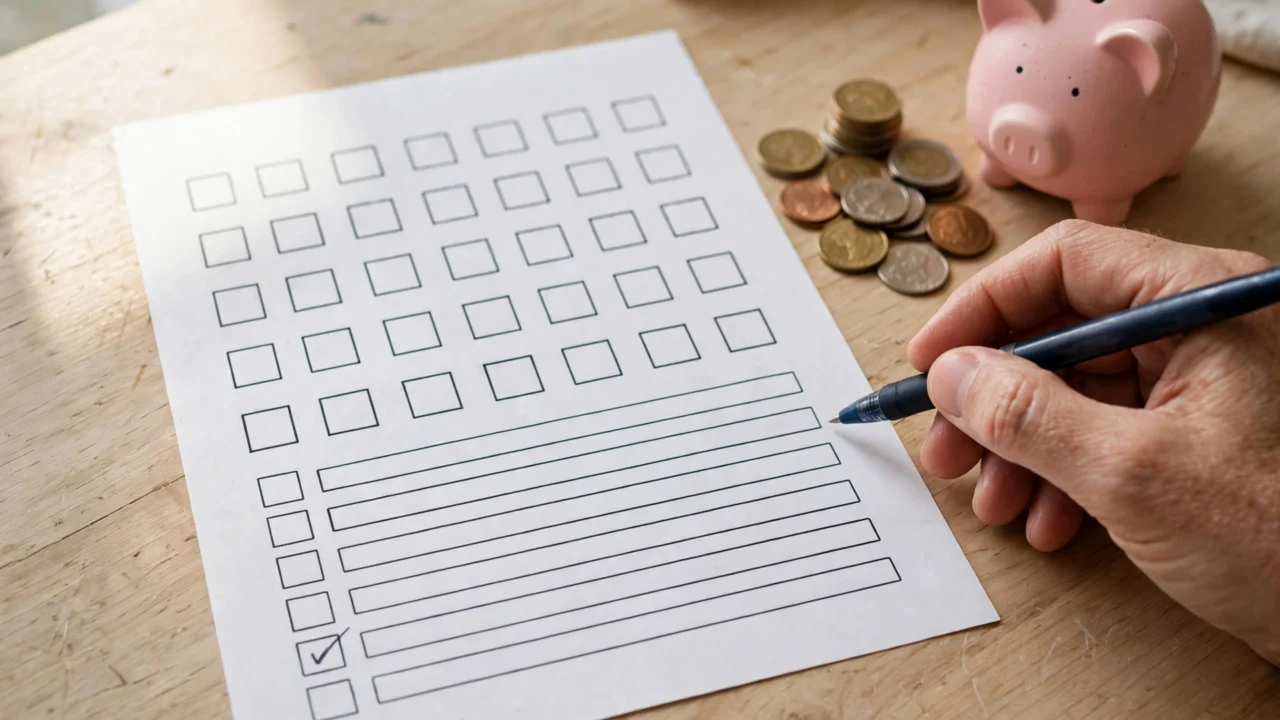





A printable savings tracker is a one-page sheet you print, pin up, and fill in by hand as your savings grow. In a world of budgeting apps and automatic round-ups, the humble printed tracker has a surprising superpower: it is physical, visible, and oddly satisfying to complete. If apps have never quite kept you motivated, a paper tracker might be the missing piece.
Why a printable savings tracker works
Digital tools are convenient, but they are also easy to ignore. An app notification gets swiped away; a spreadsheet stays closed. A printed tracker on your fridge or wardrobe door, on the other hand, confronts you every single day — in a good way.
The psychology is simple. Every tick, cross, or coloured square is a small reward, and rewards build habits. People who track their progress visibly tend to stick with goals far longer than those who do not, whether the goal is fitness, studying, or money. The tracker turns an abstract number in a bank account into a concrete, growing picture of success.

Types of printable savings tracker
Goal amount tracker
The most straightforward style: a grid of boxes or a thermometer representing your total target. Each box equals a fixed amount — say £10 or £25 — and you shade boxes as you save. Perfect for a single defined goal like a holiday or a new appliance.
52-week savings tracker
A year-long grid where each row is a week with an increasing (or fixed) amount. Print it in January, tick off weeks as you go, and by December you have a meaningful sum. It suits people who like structure and a clear finish line.
Sinking fund tracker
Designed for lumpy, predictable expenses — car insurance, Christmas, annual subscriptions. You list each upcoming bill, divide it by the months until it is due, and track the monthly contributions. This style pairs beautifully with the sinking fund method we explain in our guide to sinking funds.
No-spend challenge tracker
Instead of tracking money in, this one tracks days without unnecessary spending. A calendar grid where you mark each successful day builds a streak you will not want to break. Combine it with the ideas in our guide to cutting everyday spending for maximum effect.

How to use a printable savings tracker properly
- Choose one goal per tracker. Mixing goals on one sheet dilutes the satisfaction. One page, one target.
- Write the goal and deadline at the top. “£1,200 for car insurance by 1 March” is a plan; “save money” is a wish.
- Decide what each box means. Make the unit small enough that you can fill boxes regularly — weekly progress beats monthly leaps for motivation.
- Print it and place it visibly. Fridge, mirror, inside a kitchen cupboard — somewhere you look every day.
- Update it the moment you save. Move the money first (ideally by standing order), then mark the tracker immediately. The mark is the reward for the action.
- Review monthly. If boxes are going unfilled, the amounts may be too ambitious — shrink the unit rather than abandoning the tracker.
What makes a good tracker design
Not all trackers are equal. The best ones share a few traits:
- Simple. If it takes more than a minute to update, you will stop updating it.
- Visual. Thermometers, grids, and jars beat plain lists — the whole point is seeing progress.
- Forgiving. Missed a week? A good tracker lets you catch up or adjust without the whole sheet feeling ruined. The “pick any box” style is ideal for uneven months.
- Right-sized. A tracker for a £200 goal and one for a £10,000 goal should look very different. Match the sheet to the target.
Printable tracker vs budgeting app: which wins?
Honestly, they do different jobs. Apps are better at the maths — categorising spending, calculating totals, syncing accounts. A printable savings tracker is better at motivation. Many successful savers use both: the app handles the numbers quietly in the background while the printed sheet provides the daily visual nudge.
If you are building your first proper budget alongside a tracker, start with our step-by-step guide to building your first monthly budget — the tracker then becomes the visible face of the savings line in that budget.
Keeping the habit alive past month two
The novelty of any tracker fades. What keeps it working is ritual: the same moment each week, money moves, box gets coloured. Link it to an existing habit — Sunday morning coffee, payday evening — and it becomes automatic. And when you finish a tracker, keep the completed sheet. A drawer full of finished trackers is powerful evidence that you are someone who follows through, which makes the next goal easier to start.
For longer-term goals like retirement, the same visual principle applies at a bigger scale — see our retirement savings basics guide. And if you want to understand how small regular savings compound over time, the free calculators at investor.gov, the US Securities and Exchange Commission’s investor education site, are well worth an hour of your time.
This article is for general information only and is not financial advice.